
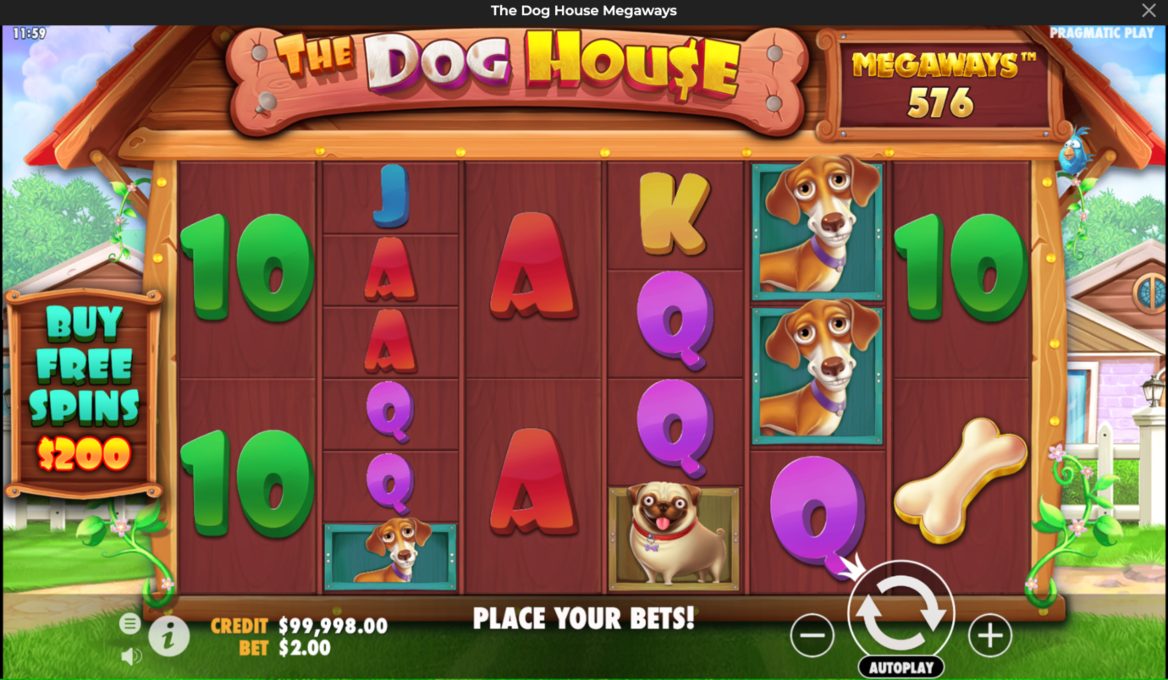
I’ve spent years helping UK players enjoy Slot The Big Dog House Mobile Version games securely from the convenience of their lounges, and I understand that account protection often is neglected until issues arise. When you get comfortable for a session on The Big Dog House Slot, the least thing you need is a breach that jeopardizes your money or personal data. In this guide I’ll reveal the precise steps I use and recommend to protect your private gaming configuration so you can spin with complete peace of mind.
Why Private Gaming Security Matters for Your Slot Play
Your home might feel like the safest place on earth, but the online gates you keep ajar can invite unwanted guests. Every login to your The Big Dog House Slot account sends data over networks that is vulnerable to interception if left unprotected. I have witnessed plenty of examples when a casual player’s carefree mindset caused drained balances or identity theft, simply because simple measures were ignored.
UK homes are packed with smart devices, common Wi-Fi and household members who might click dangerous links. When you mix gaming with real cash, you make yourself a target. I always tell players that safeguarding your slot account like a bank deposit box is not being paranoid; it is the basis of confidential, carefree gambling. The easy steps I describe below make you a hard target, so criminals move on to easier prey.
Beyond the direct financial threat, a hacked account can reveal your gaming patterns, email address and payment credentials. From my observations, maintaining privacy of your sessions requires managing who sees which information and at what time. That confidentiality is what turns your sofa into a genuine casino booth, with all the enjoyment and no unwanted attention.
Securing Your Home Network for Seamless Play
Your router is the entry point to every spin on The Big Dog House Slot, so I treat it as a critical security checkpoint. I altered the default admin password the day I plugged it in and regularly update the firmware. An outdated router is a easy target, and I’ve assisted friends recover accounts simply by closing vulnerabilities that had been present for years.
I also configured a separate guest network for visitors and smart gadgets, leaving my gaming devices on the primary secure Wi-Fi. This division means that even if a cheap webcam gets compromised, my laptop and phone remain isolated. I know it appears excessive, but in practice it takes ten minutes to configure and runs entirely in the background forever.
Strong Wi-Fi encryption is a necessity, and I never use WEP or open networks at home. I stick to WPA3 or at minimum WPA2 with a passphrase that is lengthy and nonsense. I also turn off remote management features unless I absolutely need them. Every open port is an entry point, and I prefer my router to be regarded as a locked door, not a welcome mat.
- Enter your router’s admin panel and modify the default username and password immediately.
- Update the router firmware to the latest version supplied by the manufacturer.
- Activate WPA3 or WPA2 encryption with a powerful, unique Wi-Fi passphrase.
- Deactivate WPS and remote management unless you have a extremely specific reason to maintain them.
- Set up a guest network for other household members and IoT devices.
Device Cleanliness: Protecting Your Mobile, Slate, or Computer Safe
I’m strict about software updates because each patch often seals a security hole that hackers are already using. I turn on automatic updates on my gaming laptop and tablet, and I never delay them when I’m about to open The Big Dog House Slot. A ten-minute delay is nothing compared to losing a month’s worth of deposits through malware.
Antivirus software still counts, even on modern operating systems. I run a reputable security suite that monitors in real time and detects phishing pages. I also perform a full system sweep once a week, usually on Sunday evenings, to verify nothing has crept in during my browsing. This habit has identified rogue browser extensions twice, both of which I removed instantly.
I never install cracked software, game cheats or unverified slot mods because they are among the most common delivery methods for keyloggers. Every application on my device is sourced from official stores or the casino’s legitimate site. It’s a small rule that keeps my keystrokes and private messages exactly where they belong: hidden to everyone but me.
Building a Barrier Around Your The Big Dog House Slot Account
I treat every account I own with a stronghold mindset. Kick off by using a dedicated email address set aside to your gaming logins. I maintain mine completely apart from work and social inboxes, so a breach elsewhere never flows into my slot balance. This alone drastically reduces your attack surface before we even talk about passwords.
Next, confirm that the casino platform hosting The Big Dog House Slot uses secure socket layer encryption. I always check at the address bar for the padlock icon and “https” before entering sensitive details. If the platform does not have visible security certificates, I step back immediately, no matter how attractive the welcome offer seems. Your money warrants hardline encryption as a minimum standard.
I also advise activating every possible account notification. Real-time alerts for logins, withdrawals and password changes convert your phone into a security guard. I once spotted a rogue login attempt from a city I’d never visited simply because I received an instant ping. I suspended the account and changed credentials within minutes, sacrificing nothing but a few moments.
The Role of Strong Passwords and Password Managers
I cannot overstate how a weak password is like leaving your house key under the mat with a neon sign. For The Big Dog House Slot and any associated wallets, I produce passwords that are at least sixteen characters long, using uppercase, lower case, numbers and punctuation. A pet’s name or a favorite club just won’t do any longer, as cracking tools crack those instantly.
Memorizing dozens of intricate passwords would drive me nuts until I embraced a specialized password manager. I now save every gaming credential inside an encrypted container that I unlock with one master key. This allows me to use absurdly strong passwords without needing to writing them down or duplicating them across sites. The tiny subscription fee is insignificant versus the cost of a drained account.
I also change my most important passwords every ninety days, particularly for sites that contain payment card details. It is a small chore that keeps intruders guessing. If you ever need to type a password yourself, do it with no one looking and never on a shared device. I treat slot passwords the same way I treat my PIN at a cash machine, always secured and always protected.
Spotting Fraudulent Emails and Fake Casino Emails
Fraudsters are increasingly exceptionally adept at creating correspondence that look exactly like official communication from the site hosting The Big Dog House Slot. I’ve received fake bonus offers, suspension warnings and payout notifications that sent my heart racing. The cardinal rule I follow is clear: I never follow a link in an unsolicited message. Rather, I launch a new browser window and type the casino address manually.
I inspect the entire sender address letter by letter, searching for spelling errors like “big-dog-house” with a hyphen or a domain ending in .co instead of .com. Phishers frequently register URLs that trip the eye. I also check that the email calls me by my name rather than using a common salutation. Legitimate operators are aware of my identity and never avoid that information.
When an offer appears excessively generous, I consider it as a red flag. I have seen bonuses promising thousands with no playthrough requirements that turned out to be credential harvesters. I redirect dubious messages to the casino’s official abuse department and remove them. Reporting helps protect the entire community, and it provides me with a small burst of satisfaction knowing I ruined someone’s fraudulent scheme.
- Mouse over links to view the real address before ever selecting them.
- Be alert for pressing wording calling for urgent response or account suspension.
- Look for bad grammar and unusual layout that authentic communications would never tolerate.
- Bookmark the real casino site and exclusively use that bookmark for logins.
- Never enter login details on a page reached through an link from an email or text.
Managing Funds Transfers Stealthily
When I move money in and out of my The Big Dog House Slot account, I handle the operation like a secure financial transfer. I utilize e-wallets or prepaid vouchers rather than revealing my primary debit card. This establishes a separation between my personal checking account and the gambling site, so even if the platform’s records gets hacked, my core savings remain untouched.
I also avoid saving payment details on the site if the alternative is available. Typing my card number each time feels a bit annoying, but it stops instant thefts if someone gets into my account. I compare that slight drawback against the horror stories I have encountered of entire savings vanishing overnight, and the choice becomes absurdly simple.
I examine my transaction history weekly, both inside the gaming account and on my payment provider’s app. I spot suspicious debits promptly, and notifying the provider at once keeps my liability near zero. This practice converts the simple act of gaming into a supervised, regulated session, and it gives me a clear record for responsible gambling reviews as well.
Dual-Factor Security: The Extra Layer That Keeps Trespassers Out
Even if someone steals your password, two-factor authentication can block them completely. I activate it on every platform, but especially on my The Big Dog House Slot gaming account. Every time I access from a different device, a time-based code triggers on my 2FA app, and the login fails without it. That small extra measure converts a stolen password from a major crisis into a slight trouble.
I prefer app-based authenticators instead of SMS-based codes because SIM-swap scams are prevalent in Britain. Apps create tokens offline and do not depend on mobile network security, which I’ve observed being breached more frequently than many think. Setting it up takes two minutes, and once it is running I hardly notice it until the day it saves my balance from a credential leak.
Certain platforms also offer physical security keys. I use a USB key for my most treasured accounts and simply tuck it into a drawer by my gaming rig. The physical tap provides the ultimate lock, and I’ve never seen a remote hacker bypass that safeguard. For home-based private gaming, this is about as secure as it gets.
Smart Play Tools That Double as Account Shields
I set deposit limits the moment I join on any platform featuring The Big Dog House Slot, and I urge you to do the same. These caps not only promote healthy play but also minimize the damage if someone compromises your account and attempts to empty it. A thief can only steal up to your daily, weekly or monthly ceiling, and that ceiling is defined by you, not them.
Session time reminders and reality checks are built-in features I activate religiously. On the security side, they make sure that if my account is ever compromised, the intruder cannot spin for hours unnoticed. The system requests them to confirm their presence, which breaks automated scripts and warns me to unusual activity through the notification protocols I referenced earlier.
Self-exclusion tools also serve as a last-line defence. In the nightmare scenario where I lose control of my account, a pre-registered exclusion can lock it entirely, requiring manual identity verification to restore. I hope I never require it, but knowing it exists there like a silent panic button gives me an extra layer of comfort every time I play from my sofa.
